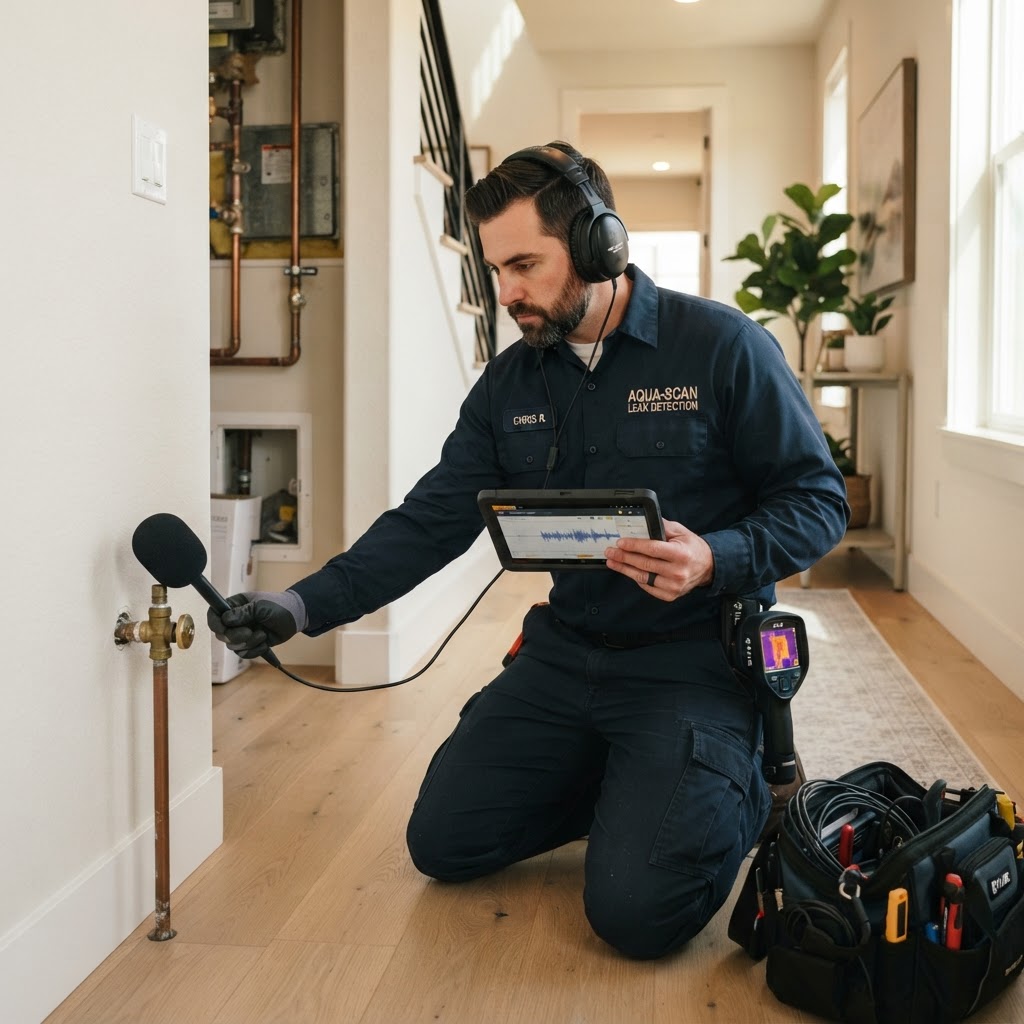
If you've recently received a high water bill, noticed signs of water damage, or been contacted by your water department about unusual water usage, you may be wondering what to expect from a leak detection appointment.
As a company that has been serving Northern California homeowners for more than 15 years, we've found that many customers are unsure of what leak detection involves. Some believe a plumber can perform the same service, while others worry that walls, floors, or landscaping will need to be torn apart just to locate the problem.
The reality is very different.
At The Leak Authority, we use specialized, non-invasive technology to pinpoint leaks accurately while minimizing disruption to your home. Here's what you can expect during the process.
Before Your Leak Detection Appointment
Before our technician arrives, you'll receive a text message approximately 30 to 45 minutes in advance letting you know the expected arrival time.
We believe communication is important. Our goal is to make sure you know when we're on the way and what to expect once we arrive.
What Happens When the Technician Arrives?
When the technician arrives at your home, they will first meet with you to discuss the issue you're experiencing and explain the testing process.
Every property is different, but most residential leak detection appointments follow a systematic approach designed to identify the source of the leak as efficiently as possible.
Rather than guessing where the problem might be, we test each section of the system individually until we identify the source.
How We Test for Leaks
Testing the Main Water Service Line
One of the first steps is often isolating the main water line that supplies the home.
By shutting off and testing specific sections of the plumbing system, we can determine whether the leak is occurring on the water service line outside the home.
Testing the Interior Plumbing System
If the main line passes testing, we then move on to the plumbing inside the home.
This allows us to determine whether the leak is coming from:
- Water supply lines
- Bathrooms
- Kitchens
- Laundry areas
- Other interior plumbing components
Testing Irrigation Systems
If the property has an irrigation system, we may also isolate and test the irrigation valves and piping.
Outdoor irrigation leaks are more common than many homeowners realize and can waste significant amounts of water without obvious signs on the surface.
What Technology Is Used During Leak Detection?
One of the biggest misconceptions homeowners have is that leak detection requires digging holes or opening walls.
In most cases, that's simply not true.
Modern leak detection relies on advanced, non-invasive technology that allows us to pinpoint leaks with remarkable accuracy.
Some of the equipment we commonly use includes:
- Tracer gas technology
- Acoustic listening equipment
- Moisture meters
- Thermal imaging equipment
- Specialized pressure testing tools
Tracer gas is especially useful because it allows us to identify leaks without damaging the property. The gas is non-flammable and safe for leak detection testing.
Combined with acoustic and thermal imaging equipment, we're often able to locate the source of a leak without any invasive investigation.
How Long Does Leak Detection Take?
Most residential leak detection appointments take between one and two hours.
The exact timeframe depends on factors such as:
- Property size
- Plumbing complexity
- Accessibility
- Number of systems requiring testing
Our goal is to be thorough while also respecting your time.
Common Misconceptions About Leak Detection
"A Regular Plumber Can Find the Leak"
One of the most common misunderstandings we encounter is the belief that a standard plumber can perform leak detection.
While plumbers are highly skilled at repairs, leak detection requires specialized equipment and diagnostic procedures that most plumbing companies do not perform.
Leak detection is its own specialty.
The difference is similar to visiting a general physician versus seeing a specialist. Both have valuable skills, but they serve different purposes.
"They'll Have to Open Walls or Dig Up My Yard"
Another common concern is property damage.
Many homeowners assume technicians must start cutting drywall or digging trenches to find a leak.
In reality, professional leak detection is designed to avoid unnecessary destruction. Our testing process focuses on locating the leak first so repairs can be made in the most efficient way possible.
A Real Example From the Field
One customer contacted us because they noticed a dripping faucet and believed it was responsible for unusually high water usage.
Their water loss was significant—approximately 10 to 15 gallons per hour.
Because the faucet was visibly dripping, they were convinced that was the source of the problem.
Instead of making assumptions, we isolated the plumbing system and performed pressure testing using tracer gas.
The results told a very different story.
The leak wasn't coming from the faucet at all.
The actual leak was located on the water service line outside the home. During testing, tracer gas revealed water surfacing through a section of the customer's garden where the underground pipe had failed.
The dripping faucet turned out to be a simple valve issue that was easily repaired.
Had the customer only replaced the faucet, the real leak would have continued wasting water and driving up the utility bill.
This is exactly why professional leak detection is so valuable. Testing removes guesswork and identifies the actual source of the problem.
Why You Shouldn't Wait to Investigate a Leak
In our experience, homeowners who act quickly often save the most money.
Leaks rarely improve on their own. Instead, they usually become more expensive over time.
Waiting weeks or months can lead to:
- Higher water bills
- Property damage
- Mold growth
- Structural deterioration
- Increased repair costs
We've seen situations where a relatively small repair could have prevented thousands of dollars in additional damage.
If you've been notified by your water provider about excessive usage or you've noticed signs of a leak, it's always best to investigate the issue as soon as possible.
What Happens After the Leak Is Found?
Once testing is complete, we review our findings with you and explain exactly what we discovered.
You'll receive a detailed report documenting the results of the investigation.
These reports can be extremely valuable for:
- Homeowners
- Contractors
- Property managers
- Insurance claims
We believe customers should fully understand both the problem and the recommended solution before moving forward with repairs.
Why Homeowners Choose The Leak Authority
At The Leak Authority, we've spent more than 15 years helping Northern California homeowners locate hidden leaks quickly and accurately.
Because we work exclusively in this region, we understand the types of plumbing systems, materials, and installation methods commonly found in local homes.
Homeowners choose us because we offer:
- Specialized leak detection expertise
- Advanced non-invasive technology
- Detailed reporting
- Insurance claim support
- Affordable pricing
- Fast response times
- Customer-focused service
Most importantly, we focus on finding the leak accurately so the repair can be completed correctly the first time.
Final Thoughts
Leak detection is not about guessing where a problem might be. It's about using proven testing methods and advanced technology to identify the exact source of water loss.
When performed correctly, leak detection can save homeowners significant time, money, and frustration.
If you're experiencing unusually high water usage, signs of moisture, or suspect a hidden leak, having a professional leak detection specialist inspect the property can help you find answers before a small issue becomes a major expense.